Współczesne życie stale nas stymuluje.
Hałas, ekrany, powiadomienia, ruch, presja, szybkość. Nasze układy nerwowe spędzają większość dnia przetwarzając ogromne ilości informacji bez odpoczynku. A jednak wiele domów kontynuuje ten sam wzorzec, zamiast oferować od niego ulgę.
Wierzę, że dom powinien robić coś przeciwnego. Dom powinien być jak wydech.
Jako architekt postrzegam architekturę nie tylko jako schronienie, ale jako narzędzie emocjonalnej regeneracji. W każdym projekcie myślę o tym, jak przestrzeń może pomóc komuś zwolnić, połączyć się ze sobą i poczuć się chronionym przed intensywnością świata zewnętrznego.
Często zaczyna się to od bardzo prostych rzeczy.
Naturalne światło, które zmienia się w ciągu dnia, zamiast sztucznej jasności wszędzie i przez cały czas. Materiały, które są dotykalne i ciepłe, a nie zimne i nadmiernie wypolerowane. Widoki na zieleń. Filtrowane cienie przesuwające się po ścianach. Przestrzenie pozwalające zarówno na otwartość, jak i prywatność.
Szczególnie fascynuje mnie relacja między architekturą a naturą. Niektóre z najbardziej uspokajających przestrzeni nie są wcale najbardziej zaawansowane technologicznie — są to te, które łączą nas z naturalnymi rytmami.
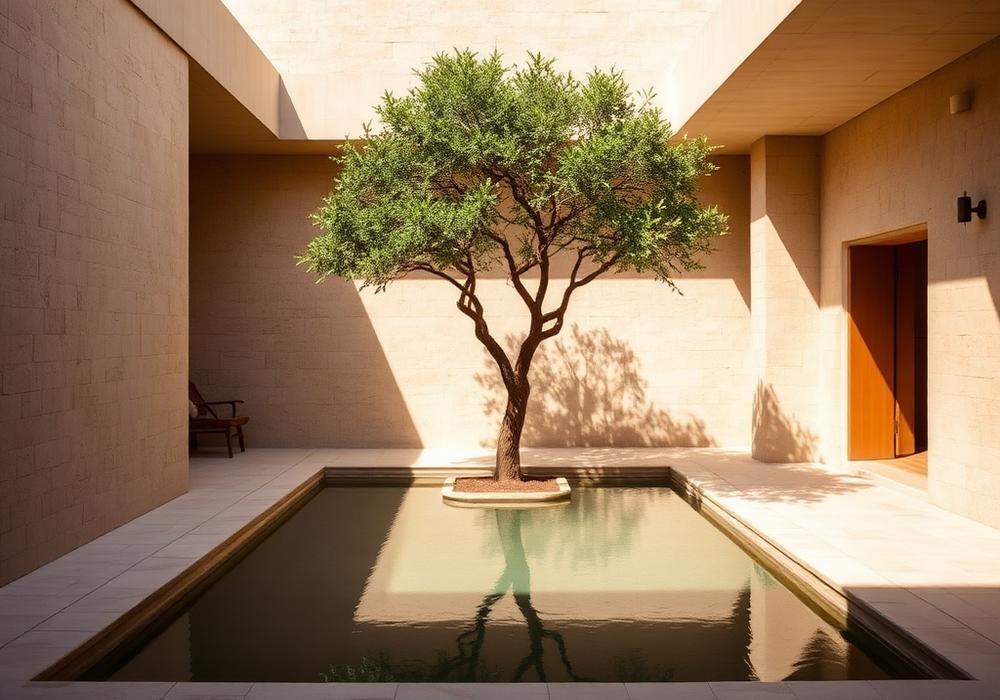
Dziedziniec z zmieniającym się światłem i roślinami widocznymi z kilku pomieszczeń. Okno oprawiające drzewa zamiast sąsiednich budynków. Naturalna cyrkulacja powietrza przepływająca delikatnie przez dom. Kamień nagrzewający się w popołudniowym słońcu. Lniane zasłony poruszające się na wietrze.
Te doświadczenia mogą wydawać się subtelne, ale z czasem głęboko wpływają na to, jak się czujemy.
W moich projektach staram się tworzyć domy, które stają się emocjonalnymi schronieniami, a nie tylko pięknymi obiektami. Przestrzenie, które redukują nadmierną stymulację, zamiast ją powiększać.
Bo w dzisiejszym świecie prawdziwy luksus może po prostu oznaczać posiadanie miejsca, które wreszcie pozwala twojemu umysłowi się wyciszyć.